Green River Chapel — History & Architecture
A Landmark at the Heart of Green River Cemetery
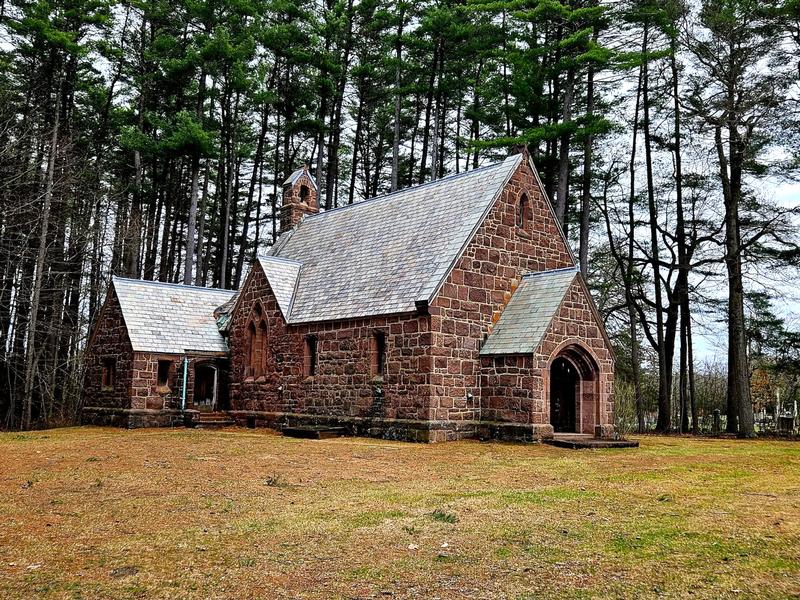
The Green River Chapel stands at the southeast edge of the white pine grove, a quiet and dignified presence that has watched over the cemetery for more than a century. Its stone walls, leaded-glass windows, and graceful Gothic lines make it one of the most recognizable and beloved features of the grounds.
Built in 1921, the chapel was designed by architect Jerome Ripley Allen and constructed using native red traprock quarried here in Greenfield. The stonework is laid in a random, rusticated ashlar pattern, giving the building a handcrafted, timeless character that blends naturally with the surrounding landscape.
Gothic Revival Craftsmanship
The chapel is a small but beautifully executed example of English Gothic Revival architecture. Its exterior is punctuated by narrow Gothic-arched windows fitted with diamond-paned leaded glass, creating a play of light that shifts throughout the day.
Above, scissors rafters support a copper-lined slate roof, chosen for durability and elegance. Inside, the walls are finished with imitation Caen stone, a special plaster mix designed to mimic the warm limestone used in historic European churches. The floors are terrazzo, with marble treads on the steps—details that reflect the care and craftsmanship invested in the building.
A Chapel Built for Community
With seating for about 80 people, the Green River Chapel served for decades as a place for funeral services, quiet reflection, and even occasional weddings. Beneath the chapel is a lower level containing crypts for winter storage of up to 32 bodies, accessed by a silent, hand-operated scissors lift that once moved caskets between floors.
Today, the chapel remains a cherished historic structure and is registered with the Massachusetts Historical Commission for its architectural and cultural significance.
A Gift of Remembrance
The chapel exists because of the generosity and vision of Isabella Russell, who left funds for its construction in her will after the death of her daughter, Kate Russell, in 1915. Isabella was the daughter of Henry Wells Clapp, and both the Russell and Clapp families are deeply woven into the history of Green River Cemetery. Their memorials can be found throughout the grounds, making the chapel a fitting tribute to their legacy.
A Living Piece of Greenfield’s Heritage
More than a century after its construction, the Green River Chapel continues to embody the character of Greenfield’s past—its craftsmanship, its community spirit, and its respect for those who came before. Whether seen from a distance among the pines or explored up close, the chapel remains one of the cemetery’s most meaningful and enduring landmarks.